There is a crisis currently unfolding in the
SWP. The crisis came about after a rape allegation made by one party member against another, was dismissed by the Disputes Committee who knew the accused. There seems to have been a good deal of victim blaming during and after the investigation, and members have been expelled for speaking out about the situation ('secret factionalising').
There has been a considerable backlash against this blatant misogyny and suppression of dissent, both within the party and the wider left.
I am not a member of the party and I suppose there are legal issues involved, so I don't want to go into too much detail on this. Richard Seymour - a party member - has written this brilliant post about it.
Today, Comment is Free have published piece by Nick Cohen, 'Why 'leftist revolutionaries' are not the best feminists'. A bit of an inflammatory headline, but hey, what else do we expect from CiF? Maybe it would be an interesting take-down of the misogyny that is rife in some quarters of the left, or the terrible effect victim blaming has on women's willingness to report rape. Perhaps he would make a point about how a party can only call itself 'revolutionary' if it fights for the liberation of all, and rejects patriarchy as well as capitalism.
What was I thinking? It seems to me that Nick Cohen hates the revolutionary left (with particular contempt for the SWP) more than he hates rape and victim blaming. Cohen has used feminism as a tool to attack a political movement he doesn't much care for. He had a platform, and he used it to peddle anti-left propaganda. By doing so, he presents a false choice between the revolutionary left, and feminism. What a great feminist ally.
So, let's look at a few quotes:
"revolutionary socialists hide the identity of alleged rapists."
Really, Nick? I'm a revolutionary socialist, and I am not in favour of anonymity for alleged rapists and I don't really know any folk on the left who are. I think what you meant to say there was, "The SWP hid the identity of an alleged rapist". Sorry it's not as reactionary, but why let a little thing like accuracy get in the way of a good opportunity to troll?
"On the face of it, the protesters have no grounds to be angry. What kind of outfit did they think they were joining?... How can people be shocked when men and women who condone jihad fail to direct the alleged victims of rape to the police? It would be more shocking if they did."
Some two-fold nonsense here, from Mr. Cohen. I'm not sure that the SWP can be said to support jihad. They support the right to self-determination for Palestinians, and oppose illegal wars against Islamic countries because they are anti-imperialist. That's not really the same as saying "'mon the suicide bombers", is it?
Also, victim blaming much? Is "they shouldn't have joined a revolutionary party if the didn't want to get raped", going to become the new "If you wear a short skirt and heels, you're asking for it"? It's pretty understandable that the woman involved didn't want to go to the police. The police have been shown to mishandle rape cases and to treat women who make allegations as liars, subjecting them to inappropriate and sexist interrogation. The woman in this case made a decision as to how she wanted to proceed, and she decided she could't trust the police. It isn't her fault that the SWP failed to honour the trust she put in them.
"One can make the same argument about Assange and Galloway."
All I really want to say here is, Assange is NOT of the left. The guy loves capitalism so much, that he wants to make it more efficient. The left has a large number of terrifying misogynists, but we shouldn't have to take responsibility for him as well.
"But a few Labour historians are more hopeful. They believe the SWP is dying and a foul Leninist tradition is dying with it. If they are right, not only will the air on the left be sweeter to breathe, but British feminism will have won a notable battle without the mainstream media even noticing."
This is what Cohen gleans from this whole disgusting mess. Nothing about the horror of not being believed by your 'comrades', nothing about the fact that being a political woman can be dangerous. Nothing about the feminists within the party who are agitating for justice. Once again, the suffering of women is used as a political tool. We were told we went into Afghanistan for the liberation of women living under Taliban rule, and now liberals like Cohen are pretending to give a crap about misogyny on the left, whilst they celebrate the demise of a party they appose.
Nick Cohen is a troll, but he's part of a tradition that uses injustice perpetrated against women as a political football whilst feigning concern. He is nothing but a vulture, and shouldn't be considered an ally by feminists of any political persuasion.
Sunday, 3 February 2013
Why Nick Cohens are not the best femnists


Tuesday, 25 September 2012
King of the beta male misogynists: Why Rivers Cuomo would be the worst boyfriend ever
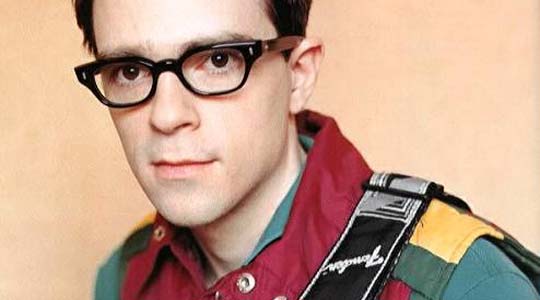
For a long time now, I've been struggling to find a phrase which accurately and succinctly describes men like Rivers Cuomo, frontman of Weezer. You know the type: skinny, 'shortsighted', owner of a million band t-shirts, aura of brokenheartedness. The 'sensitive' hipster type, who chalks every rejection up to the failure of women to understand his beautiful soul. See? Less than succinct.
Then I read this article on The Quietus. Joe Kennedy describes the phenomenon as 'Beta male misogyny', saying:
The new man, apparently, will gradually come to assert his authority over the Neanderthals of days gone by, wielding his intellect and therapeutic literacy as, once upon a time, white-shirted archetypes splashed on the Brut and flexed their biceps.
I see the beta male as a sub-genre of The Nice Guy. Although beta males have a larger music collection, more facial hair, and higher (pseudo) intellect, both carry around with them a basically sexist assumption about women: that the vast majority of us are shallow creatures, who only fancy tough, cool, handsome men. These men are searching for one of the few women who are special enough to see through their woolly, myopic exterior, and bestow unto them a sexual relationship.
I've long seen Rivers Cuomo as the archetype of this variety of man. His Weezer lyrics are a tangle of self-loathing, obsessional love, and crude sexual references. My hope is that these lyrics are mostly tongue-in-cheek, or at least less autobiographical than they first appear. But whether they are a true representation of Cuomo's inner neuroses, or a sending up of male hipster culture, they're worth having a look at.
The thing that makes beta males so insidious, is the fact that they appear to worship women. They're obsessed with the idea that we're better and gentler than them, and they're not good enough for us. The women in Weezer lyrics are cello players (El Scorcho') and eighteen year old Japanese girls ('Across The Sea') who send him letter written on delicate stationery. Idealised women, who couldn't possibly live up to anybody's idea of them. On 'Butterfly' (the lyrics of which are basically a beta male manual) , Cumo sings:
I guess you're as real as me
Maybe I can live with that
Maybe I need fantasy
He's reminding himself that he's singing about a real human women, with flaws and emotions of her own. Not only that, he's not sure whether or not he can deal with this reality. In his world, only the men are real.
What makes that lyric creepier, is what precedes it:
I smell you on my hand for days
I can't wash away your scent
If I'm a dog then you're a bitchIt seems that it was sex that reminded him that his ladyfriend was real. This reveals the central problem for the beta male: men are real, and want visceral things like steak,and sex, but women are otherworldly and have no need for such things. A woman who wants to fuck doesn't fit within this binary. She becomes real and falls from her pedestal, disappointing the beta male with her earthiness. He impresses a woman with his knowledge of Pavement B-Sides and love of contemporary poetry, but it all backfires when he gets her into bed. For him, getting laid and falling in love are incompatible, as Cuomo neatly sums up in 'Tired of Sex':
I know I'm a sinner but I can't say no
Thursday night I'm makin' Denise
Friday night I'm makin' Sharise
Saturday night I'm makin' Louise
Oh, why can't I be makin' love come true
But say the impossible happens, and he finds a girl who he's sleeping with but not disgusted by? Great! Happily ever after, right? Wrong. The beta male is infamously possessive. He knows he's found the only girl cool enough to understand and appreciate him, and he doesn't want anybody else to get a look in. 'No One Else', Cuomo's describes his girlfriend in grotesque terms. She's got a 'big mouth' and 'eyes in the back of her head'. At least he's upfront about what he does want in a woman:
I want a girl who will laugh for no one else.
When I'm away she puts her makeup on the shelf.
When I'm away she never leaves the house.
I want a girl who laughs for no one else.(For the record, I think this is one of Cuomo's most tongue-in-cheek lyrics, but it feels as though there's an element of truth in there, too.)
Most women would object to being told not to laugh or leave the house and so, understandably, the beta male often finds himself alone. Bitterness and resentment build up, and lead to lyrics like this: (from 'The World Has Turned And Left Me Here')
I talked for hours to your wallet photograph
And you just listened
You laughed enchanted by my intellect
Or maybe you didn't
You remain, turned away
Turning further every day
Beta males think of themselves as perpetual victims. Victims of callous, shallow women who trade him in for a model with bigger biceps and smaller record collection. The beta male thinks of himself as an intellect, a 'modern man' and a shoulder to for women to cry on. A generally good dude. But he doesn't feel women understand him. They leave him because he's obsessive, and controlling. but he thinks it's because they want somebody else, somebody more obviously attractive and cool. Each time he is rejected, this victim status is reinforced and his view of women becomes more reductive, as he ceases to see us as individuals, but as something to be conquered.
So next time you're in Dalston and you meet a man who wants to talk to you about Sharon Olds and Silver Jews, but seems to have a few too many harsh words to say about his ex-girlfriend who wore makeup and laughed at her friends' jokes, maybe unravel his sweater a little bit, just to check what's underneath.
Monday, 6 February 2012
Why I call myself a socialist feminist
I had a sort of argument in the pub the other night, with a lovely and clever lady whom I really like. The conversation turned to the different waves and varieties of feminism. We discussed some of the problematic aspects of second-wave feminism, and the problem with Louise Mensch calling herself a 'blue feminist'.
I describe myself as a socialist feminist because I believe that capitalism is the root cause of oppression, and that overthrowing this system is the only way to end it. I reject the idea that reform and tinkering about with neo-liberal policies is the key to liberation.
When I said this, the response was "But if you're a socialist you are, by definition, also a feminist." Apparently the way I define my feminism is tautological.
Now, my glib response to this would usually be, "Well, you can't have spent much time in the company of socialist men, then." Hur hur hur. But, just for once, I've decided not to be a Snarky Susan.
Why is it important for me to define as a 'socialist feminist'? Why do I not agree that I should, even linguistically, keep these two parts of my political identity separate?
Firstly, because I feel that it's necessary for me to indicate that I'm a 'capitalism-hating feminist' rather than a 'seeking equal bonuses for women bankers' type of feminist. When people like Sarah Palin and the aforementioned Louise Mensch are calling themselves feminists, I need people to know that I don't hold the same views as them.
Secondly, because I don't think that patriarchy is soley to blame for women's oppression. The power structures involved are more complex than this explanation implies. For instance, socialist feminism helps me to recognise my own privilege as a white, cis, able-bodied, middle class woman. Women are just one of many groups who experience oppression in our society; socialist feminism links women's struggle to other liberation struggles in a way that I don't feel patriarchy-based models do.
And this is the important part for me. I don't see our struggle as isolated, and socialism gives me the tools for understanding how various forms of oppression are linked, as well as helping to unite our struggles. Socialist feminists campaign against human rights abuses, against spending cuts, against racism and fascism, against illegal wars and occupations and an endless amount of other bullshit that capitalism throws at us every day.
Lots of other sorts of feminists are involved in these campaigns too. And I'm glad there is a plurality of feminist voices because the moment we stop critiquing our movement, it gets stuck, becomes irrelevant, and dies. It's important for us to be able to come together on issues that unite us, and talk constructively about what divides us ideologically.
But socialism is what gives meaning to my feminism. It helps me to understand where we're at, and where we need to get to. I'm not blue, liberal, anarcha or anything else. I'm a socialist feminist, however unfashionable and scary that may be, and I'm not willing to drop either one.
Friday, 9 September 2011
On the 'This Is Abuse' campaign.
Over the last couple of years I've been updating this much-neglected blog with my thoughts on news stories, music and film from a feminist perspective. I haven't felt the need to share much about myself. I hadn't thought it necessary.
This changed when I heard about the government's, 'This Is Abuse' campaign, which aims to tackle the problem of violence within teen relationships. Unfortunately, I don't have the privilege of 'professional' (ha!) distance when it comes to this subject.
I'm 23 now, but between the ages of 18 and 19, for just over a year, I was in an abusive relationship with a man who was 4 years older than me. It started slowly, but, when I look back, the warning signs were all there. I was always a shy, awkward girl. I was bullied a lot at school and suffered from extremely low self-esteem and anxiety. I was easy pickings for somebody like Sam*. He was good-looking, and when we got together at my 18th birthday party, my more popular friends were jealous.
Soon after, he was asking me to see him every day and lie to my Mum about where I was. He would make me feel guilty if I said I had homework to do, or that I wasn't comfortable with this dishonesty. This guilt-tripping became anger. Slamming doors, using his height to intimidate me, shouting into my face. He criticised my family and friends, trying to isolate me from people who cared about me.
And then the inevitable happened, and it turned violent. He pushed me down the stairs because he didn't like the fact that I had a crush on the bassist in my favourite band. His Mum and Dad saw it happen and did nothing. After that, he'd regularly hit and shove me. When I moved to London for university, he'd come and visit every weekend, and call several times a day. I didn't dare go out because if I did, there'd be hell to pay when he came down to see me that weekend.
One weekend, we were both out at the Scala in King's Cross. He hit me in front of a crowd of people, and tried to push me down the stairs of the venue. I don't know what it was that made that time different, but I knew that was going to be the last time he came anywhere near me. I broke up with him over the phone later that week.
It didn't end there, though. He called me 60 times or more a day, and sent death threats. He'd taken photos of me getting changed without me knowing, put them on a fake Facebook page, and invited people I knew to 'friend' it. I was afraid and devastated so I called the police.
I showed them the number of missed calls, the text messages containing death threats, and detailed the numerous assaults I had endured over the course of that year. Their response? He's just heartbroken. They said there was nothing they could do, and it wasn't their job to get involved in teenagers' relationships.
So I left it there. Angry, but tired and defeated. Over the last few years, I've been learning to cope better with what happened. I still have flash-backs, and I find it very difficult to trust people. I'm extremely touchy about being bossed about by anybody. But I'm ok.
The scariest thing about all of this, is the fact that my story is incredibly common. According to Women's Aid, 1 in 4 girls experience relationship abuse. This is the same rate at which adult women experience it. It may not look the same, because teenagers tend not be married to their abusers, have children with them, or even live with them. But to dismiss their experiences as petty drama, or to say, 'why didn't you just dump him?' is to fundamentally misunderstand what makes women of all ages stay with an abusive partner. Many women who are abused suffer from low self-esteem even before they experience abuse, and abusers systematically grind down any confidence and independence their victims have left. It's easy to believe you don't deserve any better when that's the message that is, sometimes literally, beaten into you.
If publicised widely enough, the 'This Is Abuse' campaign could have a positive impact. Teaching young people to recognise the signs of abuse, on both sides, and providing them with resources to help themselves out of dangerous situations is undoubtedly important. I hope that if I had been aware of the prevalence and early warning signs of teen relationship violence, I might have been able to end things earlier on. One thing I know I would have felt off-putting about the site is the number of comments from men and boys saying that the initiative is 'bigoted' because it focusses on girls as the most common victims, and boys as perpetrators. The 'Have You Your Say' message board is swamped with such comments despite the fact that throughout the website, there are references to teenage boys being victims too, and resources to help both them, and girls who perpetrate violence against their partners. However, the site could do more to address the diversity of relationship violence. There are few references to violence outside of relationships between 2 straight, cis people.
This campaign won't have the necessary impact on its own. We live in a society that fosters feeling of low self-worth in women and girls. That becomes dangerous when coupled with the sense of entitlement that many cis men are brought up with. Education about the intricacies of consent and respect in relationships should form an important part of sex education in schools. In the Guardian Women's Blog post about the site, they quoted a statistic that I found particularly uncomfortable:
When the Boston Public Health Commission did a 2009 survey of 200 young people aged 12 to 19, they found that 46% of respondents blamed pop star Rihanna for the brutal attack by her then boyfriend, Chris Brown.
It's awful to think that there is a percentage of teenage girls who think that if they get a bit gobby with their boyfriends, they deserve to be punched in the face. We need to be teaching them to expect more for themselves, and ensuring that the police take allegations of this sort seriously when they are made. However, as a fan of patriarchy-smashing and capitalism-destruction, I think there's a limit to how much this sort of education can do to end violence against women in all its forms. As a short-term measure to make things a little easier, it's fine. But as long as we live in a society that relies on oppression and violence to function, violence against women will occur.
(If anybody reading this needs some help, here's a pretty comprehensive list of organisations who can provide support and advice.)
*Name changed.
Tuesday, 3 May 2011
Quentin Tarantino: Empowerment or true Exploitation?

Being a feminist is awesome. Having a patriarchy-based explanation for the unfairness you see in the world around you helps to make sense of things. It provides a frame of reference for your frustrations and helps to you construct coherent arguments against oppression.
The problem is, once you've switched on your feminist radar, there's no switching it off. You start to see the whole world in these terms. This is fine, until you being to scrutinise things you once enjoyed without question. You soon discover that lots of your favourite things are riddled with oppressive stereotypes and tropes, sexist or otherwise.
The problem is, the world isn't divided into easy categories. Everything that we consume, has been created under a capitalist, patriarchal system and will reflect this in some way. The upshot of this is that basically everything you enjoy, every nerdy fandom, every favourite novel, film and band, will end up bleeping 'Patriarchal Bullshit' on your feminist radar at some point.
Annoying, isn't it?
I'm a long-time Quentin Tarantino fan. For a while, I refused to sit anywhere but the third row at the cinema because he once said that he'd never go on a second date with a woman who sat anywhere else. Oh, the shame of it.
I love his films. I love the heavy referencing of other films and genres, the sassy dialogue, the soundtracks, the casting, the stylised nature of them. These days though, I find myself wincing a lot at some of the violence and depictions of women's sexuality, amongst other things. I don't enjoy the films less, I'm just more critical of them.
The main accusation levelled at Tarantino, is that his graphic depictions of violence against women are fetishistic. It's hard to argue with this when you recall the crash scenes in 'Death Proof'. There's something grimly pornographic about the way Rose McGowan's character is desperately begging to be freed from Stuntman Mike's car, and the close-ups of her violent death are extremely painful viewing. There's also relish in the slow-motion replays of the crash in which the first group of women are killed. Julia's long leg being ripped off as she hangs it out of the window of the car, seems particularly poignant and gruesome. I do think though, that it's important to see this film, more than his others, as a genre film. As part of the 'Grindhouse' double-bill, it's a straight-up Exploitation film, with everything that entails: hot girls, violence and a killer soundtrack. Of course, this in itself is problematic for obvious reasons.
One thing that doesn't get talked about too much is the trope of the vengeful woman that appears regularly in his films. The Bride in 'Kill Bill', and Zoe Bell and her cohorts in 'Death Proof' are enacting sweet revenge on the people who have harmed them. In 'Kill Bill', The Bride kills off every member of the Deadly Vipers Assassination Squad, as well as a man who raped her whilst in a coma. In 'Death Proof', Stuntman Mike is killed for attempting to murder a second group of women with his stunt car.
Although on the surface, this seems a somewhat empowering idea, women enacting revenge isn't really very subversive. They are reacting to violence rather than instigating it, which doesn't really do much to upset the idea that women are incapable of being truly violent. The idea that 'Hell hath no fury...' isn't empowering. It's a way of reproducing the stereotype that women are calculating and bitter, rather than spontaneous in the way that men are. This is off-set slightly in 'Kill Bill' by the number of women assassins, most notably the frenzied Gogo Yubari. These characters do represent the cold-blooded killers so rarely portrayed on screen by women.
These vengeful women aren't exactly girl-next-door types either. Tarantino's women can kick serious ass, but they don't look like you or I. The actresses in his films are fairly standard Hollywood-types; mostly slim and conventionally attractive. I would say, though, that they are probably more ethnically diverse than the women stars of other Hollywood films. But it's not just their looks that mark them out as different from us 'normal' women. Tarantino seems to idealise these characters, making them cooler, sassier, stronger and sexier than the rest of us. This is particularly true of the women in 'Death Proof'. They're also worshipped by men. Think, for instance, of the effect that Mia Wallace ('Pulp Fiction') has on the men in her life. As much as we'd probably like to, it's pretty hard to relate to these women. You often end up wishing you were more like them, in the way that watching a film starring Angelina Jolie often makes you despair at what you see in the mirror.
And then there's the issue of the man himself. Joking about an action figure of himself called 'Rapist #1' kind of precludes him from being known as Feminist of the Year(to say the very least). So does saying Gwyneth Paltrow isn't “isn’t trampy enough” to be cast in porn films. But sexist comments from him as a man, don't mean that his work is without any feminist merit.
For example, casting women in leading roles, is still relatively rare and is indicates that he values women's narratives and may even understand the importance of women seeing themselves represented on the screen.
As Carol Pope and Katherine Pearson write in their book The Female Hero in American and British Literature, “any author who chooses a woman as the central character in the story understands at some level that women are primary beings, and that they are not ultimately defined according to patriarchal assumptions in relation to fathers, husbands, or male gods.” They argue that, whether explicitly feminist or not, “works with female heroes challenge patriarchal assumptions.”
(From an excellent post on Bitch Magazine on Taratino.)
Putting women on screen not just as a girlfriend, a wife, a mother or plain old titillation, is saying that women are worth watching. That they're interesting enough to carry a film themselves. How depressing that this is unusual.
Also unusual, is the way that women's bodies are portrayed in Tarantino's films. Being a Hollywood director with a fondness for exploitation cinema, there are plenty of scantily-clad women in his films. However, these women do far more fighting than fucking (excuse my language.) They're often bare-foot and dirty, scrapping or fighting for their lives with samurai swords, guns, boots, and even cars. Their bodies are seen as strong as often as they are portrayed as sexy, and they use them to ensure they are not made victims of. They're not afraid to say 'no' and to fight back.
In this refusal of victim-hood, they take agency in their situation. This is a stark contrast to the women who are routinely brutally murdered on screen in so-called 'torture porn' films. Those unhappy women have usually transgressed in some way (for instance, they've had sex) and are now paying the inevitable price. Even when faced with the Crazy 88s, there's nothing inevitable about The Bride's situation in 'Kill Bill'. Instead of the traditional, passive role women take in the cinema, Tarantino often portrays women controlling their own destiny. There is definitely something empowering about women believing their lives are worth defending, and then having the strength to defend themselves. In a society where only a tiny percentage of rape cases end in a conviction, it's refreshing to see women get some justice even if it's just on screen and ugly as it may sometimes be.
Tarantino may not be a feminist, he may even be a sexist pig, but he is a clever and imaginative director. Where his contemporaries fail to cast women in powerful lead roles, and instead give them bit-parts as murder victims and bickering girlfriends, Tarantino recognises the power women and their stories can have on-screen. His portrayals are often problematic, but that doesn't mean we should write his work off as entirely sexist or anti-feminist. If women leave the cinema feeling a little tougher, rather than feeling a little uglier or less successful as usual, then that's something to be celebrated.

(As a special treat for reading the whole of my ramble, have one of the best songs ever written. And it's on the 'Death Proof' soundtrack.)
Tuesday, 20 July 2010
RAPISTS: DO NOT RAPE!
I was upset and disgusted to read about the 2 alleged rapes that occurred this weekend at Latitude festival. I went a few years ago, and had an incredible time. Ever since, I've said it's the only UK festival I would go to (other than ATP, which doesn't really count) because as a music-loving non-drinker, I felt entirely at ease, wandering about by myself.
I do a lot of that at festivals, because I'd rather be seeing as many bands as possible than getting trashed in a tent*. I've often headed back alone at night to my tent to join the campfire festivities. And who really wants to have to wake up their friends in the night so that they have an escort for the loo?
Obviously, the organisers of Latitude have expressed their dismay at these horrible events. Unfortunately, they have come up with a rather patronising solution, to ensure that nothing like this happens again:
"Festivals provide an element of outdoor freedom. That is integral but our ability to inform young girls in particular about the dangers of sexual predators is something we can do more on, and we will."
In this ineffectual, and frankly nonsensical, statement, Melvyn Benn, the chief executive of Festival Republic, heaps responsibility onto 'young girls'. Apparently, instead of enjoying the 'outdoor freedom', we should be worrying about rapists leading us off into the woods. It's not that I don't think that we should be concerned with personal safety at all, it's that I object to the burden of fear and trepidation that women are supposed to carry. Instead of telling men not to rape, instead of educating about the intricacies of consent, about respecting women's bodies and boundaries, women are simply told that we're never safe.
And, realistically, can we ever live like that? Can we live our whole lives never walking alone after dark, never going to see a band, or enjoying a festival on our own? I don't think we can, or nor should we have to. Making women invisible and afraid won't stop rapes or rapists. It'll only make women who have been raped feel responsible for not taking enough precautions.
How about, as well as tightening security and lighting the site more effectively, Latitude attempt to educate people about rape? How about they encourage potential rapists to take responsibility for themselves, and their actions.
How about something like this attached to every tree:
RAPISTS/POTENTIAL RAPISTS. DO NOT RAPE. IT DOESN'T MATTER IF SHE'S ALONE, SCANTILY DRESSED, DRUNK OR ON DRUGS. IT ALSO DOESN'T MATTER IF SHE'S INVITED YOU INTO HER TENT, OR SHE'S BEEN MAKING OUT WITH YOU. NONE OF THESE THINGS ARE EXCUSES FOR RAPE.
Now, I know it may be a little unorthodox, but it would definitely make me feel safer at a festival, instead of paranoid about personal safety. But maybe society doesn't women to feel safe, maybe it suits them that we remain scared and not too bold. But that's probably a post for another day...
*(Getting trashed in a tent is also totally fine, I just find alcohol yucky and boring.)
Thursday, 20 May 2010
Enough hatin'
About a month ago, I went on an all-women bike ride called 'Revenge of the 50 Fixed Women' with the excellent Laura. We were pretty excited about it. The idea of a group of women riding together, most on fixed gear bikes, and then getting a drink afterwards, was brilliant. We'd wanted to do something similar for ages.
Sadly, it didn't live up to our expectations.
What we were hoping would be a supportive atmosphere, turned nasty fairly early on. Several girls on the ride were incredibly rude about Laura's bike. Later on, at the pub, we were left to sit pretty much alone. Needless to say, we didn't stay long. Neither of us appreciated being made to feel like the lonely unpopular kid at school (probably because we've both been there, done that!)
We've been trying to decide why we think this happened. Fixed gear cycling (and cycling in general) is dominated by men. Women are outnumbered and not properly catered for within the industry. Sadly, it seems like some of the women involved in this scene have a complex about this and are worried about seeming amateur, or unable to keep up with the boys. They feel like they have something to prove, to be the cool girl who's keeping up with the boys.
This creates a sense of rivalry, which isn't a good environment in which to create a sense of community.
I'm so tired of women being pitted against each other in every aspect of our lives. It's not that I think we should all be friends, or even that we have anything in common with each other just because we're (trans and cis) women. It would, however, be nice if we weren't encouraged to be jealous of each other or to see each other purely as rivals for the attention and respect of men. We shouldn't have to trample over each other to get that, it should be a given.
The media paints us as petty gossips and bitches. We even secretly hate our friends. It's considered cool to say that you don't really have any girl friends because you just don't get on with them. Or the classic, 'other girls just don't like me', which is code for 'I'm so attractive to men, that other girls are super jealous of me and don't want to be around me.'
We need to all be able to see through this bullshit. That this is a way for men to get things from us, to make us pander to them and put them first all of the time. It serves a patriarchal, capitalist society well to keep women divided. Heaven forbid we organise together, then we might be able to do smash their systematic oppression!
So let's chuck out the gossip rags and shout down the people who lie about who we are. They don't know us! Some of us are gossips, some of us bitch about others (I guess we all do sometimes) but we are a million other things too. Let's make sure 'supportive' is one of those things. Why? I turn here, as I always do, to the Riot Grrrl Manifesto:

BECAUSE we are unwilling to let our real and valid anger be diffused and/or turned against us via the internalization of sexism as witnessed in girl/girl jealousism and self defeating girltype behaviors.
GRRRL LOVE FTW.
Too tired for words.
It seems like I start every post with 'Wow, its been ages since I posted.'
For the last few months, I've been working 48 hours a week, often ten and a half hour days. When I get home, I'm exhausted. I don't need to use my brain at all when I'm there, and I feel like it's rotting away.
Feel free to send me inspiring things to help me to get my writing groove back. I don't know where it's gone.
Thursday, 7 January 2010
Save The Boobies!
Wow, that was a long absence. I have been suffering from a prolonged case of writer's block and I had to dedicate a lot of time and energy to eating Christmas chocolate. Unsurprisingly, I was roused from this unproductive slump by anger and frustration. Because that's the type of gal I am.
This morning I began to notice that a lot of my female Facebook friends had random colours as their Facebook statuses. I didn't understand, so, after checking it wasn't some super-cool internet trend that I had missed, I decided to ask what it was all about.
It turns out, the colours weren't random. Women have been encouraged to update their statuses with the colour of their bra. Why? For breast cancer awareness, that's why. Apparently telling everybody on your friends list that you're wearing a red bra, is, like, totally a positive thing.
Except that it's not. It's creepy.
Practically, it's not useful because it's cryptic. It doesn't tell us anything about breast cancer, how to donate to a breast cancer charity, how to prevent the cancer or even how to check ourselves for it. We all know breast cancer exists, so it doesn't tell us anything new.
My other main problem with it is that it enforces the idea that breast cancer is bad because breasts are attractive and sexy, not because it kills women. It is hard to deny that describing your underwear in a public sphere is supposed to be a bit titillating. It reminds me of an this American breast cancer campaign:
I don't know about you, but this ad made me want to punch myself in the face. Reducing women to their body parts, removing their humanity, making them a piece of meat is NEVER acceptable, even for the cause of breast cancer awareness. Granted, the Facebook thing is not as bad as this, but I see it as part of the same sexist strategy.
What would have been positive, is if people, not just women, had been encouraged to post links to self-examination guides or websites where you can donate some money.
I want women's lives to be saved, not just their boobies.
(This is a good guide to self-exams and you can donate to Breakthrough breast cancer charity here.)
Tuesday, 5 January 2010
Normal service returns soon
I will update Swimsuit Issue soon when i cease being a useless human being. Which will hopefully be this week. In the meantime, here's my new, more personal blog: hey goo!! what's new?
The first post explains what I want to do with it. It isn't very interesting, but if you want to have a look then go ahead!!
Monday, 7 December 2009
The Problem With Beyoncé & Sasha Fierce
(Another BitchBuzz post)
After watching Beyoncé's 'Video Phone' about 163 times today, I've decided that I'm no longer content to waste hours watching her on Youtube, I want to be her. I want to be able to dance like her, sing like her and wear her clothes. There is a small problem though, according to Beyoncé, the 'her' I want to be isn't 'her' at all but her alter-ego Sasha Fierce.
Sasha Fierce is the one stomping about in the 'Single Ladies' video, proclaiming 'A diva is the female version of a hustler' and getting down and dirty with Lady Gaga in 'Video Phone'. Beyoncé explains,
“I have someone else that takes over when it’s time for me to work and when I’m on stage, this alter ego that I’ve created that kind of protects me and who I really am”.
Creating a persona for performance is something that many musicians do - Madonna and David Bowie are probably the most obvious examples. I can understand the need to do this in some ways. I'd imagine it can help with nerves, and you can disassociate yourself with more outrageous parts of your act.
This behaviour isn't confined to performers though. Many of us have probably found ourselves putting on an act when we're out with friends, scoping out potential bedroom-buddies. And in the bedroom, it gets more pronounced. Women's magazines are always telling us to dress up and create fantasy scenarios for our partners.
The problem is, you can hold an Anne Summers party and take the pole dancing class but the moment you stop performing and make it real, you are made to feel ashamed. Women's sexuality and sexual history is used against them in rape and harassment cases. We're supposed to be Sasha Fierce in the bedroom and Beyoncé everywhere else.
Whilst I understand that creating an alter-ego can be useful for performers, in this context, Beyoncé's insistence that Sasha Fierce protects who she really is seems a bit sad. Obviously, her sex appeal has helped her to sell a lot of records, but underpinning this is the idea that she's not really sexual, she's a good girl. Because, of course, women aren't allowed to be both.
This seems cynical to me. She knows that sex sells but she also knows that she must avoid being labelled as a 'slut' so she distances herself from her own behaviour. It's not totally her fault though, you only have to look at women like Gaga, Xtina, and Britney to see how woman who are openly and unashamedly sexual are demonised in the press. Who would willingly put themselves through that? Certainly not me.
People often talk about Beyoncé as a great role model for young women. In lots of ways I suppose she is. Her lyrics can be empowering and she seems pretty down to earth and clean living. The sexuality she portrays in songs like 'Single Ladies' is also mostly positive. It's assertive and powerful. Here's a woman who would be just as comfortable saying 'no' as she is saying 'yes'. If she owned this as part of her personality, she could well be a brilliant role model but as long as she distances herself from it, I can't quite buy into the idea of Beyoncé The Ultimate Empowerment Queen.

Monday, 23 November 2009
5 Inspiring Women to Get You Cycling!
(This is another post that I did for BitchBuzz)
More women than ever are taking to the London streets on their bikes in a bid to go green and save some money on bus fares. We enjoyed a summer cycling in chic city shorts, mini skirts and whimsical summer dresses. We didn't have to worry about getting cold or wet, we felt proud about getting around under our own steam and we acquired a healthy glow.
And then, over night, everything changed. It's freezing cold, rainy and blowing a gale. On days like these, cycling doesn't just seem unappealing, it seems like total idiocy. Your steely resolve to cycle into work every day starts to waver and soon it's been a fortnight and your bike needs therapy for its abandonment issues.
So to give you that little shove through the door with your two-wheeled ride in tow, here are a few women with serious pedal-power. If they can do it, you bloody well can too.
Beryl Burton
Beryl Burton is one of the greatest female cyclists of all time. And it wasn't just her fellow women that she beat. In 1967 she set a record for the twelve-hour time trial that wasn't beaten by a man for two years. If the Olympics hadn't thought women too fragile to cycle competitively, she would probably have dominated there too. Sadly, the seven-times world champion died of heart failure at 58.
Suffragettes (Susan B. Anthony)
'New Women' at the turn of the century recognised the revolutionary potential of the bicycle. Susan B. Anthony, the feminist civil rights campaigner, said, "I think [the bicycle] has done more to emancipate women than anything else in the world. It gives a woman a feeling of freedom and self-reliance.”
Victoria Pendleton
Victoria Pendleton is a British world champion track cyclist. She also won the gold medal for the individual sprint at the Beijing Olympics (apparently we're not too fragile to pedal really fast anymore). Amazingly, Pendleton is no longer allowed to run because her muscles are honed specifically for cycling. That's how good she is.
Juliet Elliot
It's disheartening to see this great fixed-gear rider drooled over, rather than admired, by hipster boys. She's sponsored by Charge which is something most of these plaid-shirt-loving guys could only dream of. She pulls off some pretty brilliant tricks, proving that she's not 'cute', but awesome. I do wish she'd wear a helmet though.
Jemina Pearl
Jemina Pearl was the ultra cool singer from now the sadly defunct Be Your Own Pet. There are so many reasons to love Jemina - she used to puke onstage and throw it at boys for goodness' sake - but her love of cycling is what gets her a mention here. I'll leave you with some lines from their classic 'Bicycle, Bicycle, You Are My Bicycle', “Have fun, and be safe with it, Just kidding, f*** s*** up! We ride bikes, cars are for idiots.”
Exactly Jemina, exactly.
Image via RandomDuck's Flickr

Monday, 16 November 2009
How Rihanna Became a True, Real Life Role Model

This was originally written for BitchBuzz Go and look at their lovely website. I'll be writing a piece for them each week which I will cross-post here.
Following the coverage of the Rihanna and Chris Brown abuse incident has been almost universally depressing. First there was the harrowing photograph of her battered face that was leaked by police, Brown’s fans relentlessly blogging about how she must have deserved it and, most recently, people saying she’s using her ‘victim’ status to sell records. If there was ever an event that showed how wide-spread misconceptions about intimate partner violence are, this was it.
I was so pleased then that Rihanna decided that she felt strong enough to be interviewed. Commenters have said that they had admired her silence on the matter, that it is more dignified to keep quiet than to speak out. A lot of people would rather Rihanna remained quiet. Chris Brown beat her allegedly because she would not be silent, because she wanted answers about his behaviour. She should not have to be quiet now if she doesn't want to be.
Importantly, she didn't just have things to reveal about her personal experience. Although the details about what she endured in the car that night are the most immediately shocking part of all this, the fact that this experience is shared by so many other young women is the real controversy. Approximately one in four teenage young women experience violence and abuse from a partner. Clearly Rihanna is not alone.
And it seems she is acutely, painfully aware of this fact. A few weeks after Chris Brown beat her up, she flew to be with him. In the interview, she describes the confusion she felt about her feelings towards him. She wasn't able to cut herself of from him immediately, which is understandable. As Rihanna points out herself, women are often abused eight or nine times before they leave a violent partner for good. The problem is, Rihanna is a huge star, admired by millions of young women around the world, one in four of whom will experience violence from a partner. Concerned that other women will follow her example, Rihanna advises abused women to distance themselves from their relationship and act for themselves in their best interests, "...don't react off of love, eff love. Come out of the situation and look at it third person...because love is so blind."
Encouraging women to leave physically abusive situations is important, but it's also important to be able to recognise the early signs of an abusive relationship. Rihanna mentions that Chris Brown had 'shoved' her before this happened. Even now, after having been beaten by this man, Rihanna plays down the prior physical abuse because it didn't leave her bruised. Commonly, women see some of the tell-tale signs of an abusive partner as flattering or loving. Jealously is seen as romantic and rows are often off-set by charming apologies.
When people wonder why teenage girls stay with violent boyfriends, this is often the reason. Relationships in the media are often portrayed as tempestuous and arguments are just a sign of passion. But there is a fine line between passion and abuse and it's important that young women and men are educated as to where that line is. Hopefully Rihanna's bravery in talking so candidly about her experience will educate other women in her position and help them to see that they do not need to be ashamed or alone. As Rihanna says "I am strong...this happened to me, it could happen to anybody."
Sunday, 15 November 2009
Featured Feminist: Kathleen Hanna
(I know I was supposed to have been a more regular, disciplined blogger as of two weeks ago. My grandma died though and now I have swine flu so I'm starting late.)
So my first featured feminist is Kathleen Hanna. Because I love her.
Who is she?
Kathleen (I hope she won't mind me calling her that) is probably best known as the singer in legendary riot grrrl bands Bikini Kill and, more recently, Le Tigre. She's a D.I.Y. scene legend, responsible for some of the most influential zines ever, Revolution Girl Style Now and Bikini Kill. She also wrote the Riot Grrrl Manifesto (which I quote from at every opportunity) which was published in Bikini Kill #2. Outside of the Riot Grrrl Movement, Kathleen has been involved in pro-choice campaigns since she was much younger, speaking openly about her abortion which she had at 15.
Why do I love her?
Isn't it obvious? Kathleen Hanna's emphasis on women's solidarity and creativity is inspirational. In the individualistic days of post-feminism, when women are told we have everything we want, her Manifesto seems more relevant than ever. Women getting together to do constructive and creative things is a two-finger salute to this capitalist 'handbag feminism' bullshit.
Kathleen Hanna, I salute YOU!!

Sunday, 25 October 2009
Weekly round-up
It's Sunday, so it's weekly round-up time! The first EVER one no less!
Response to transphobia in Seventeen magazine article
This is filed under, 'great response to a maddening article'. Seventeen magazine in the US recently ran a 'real life' story of a high school girl who boyfriend turned out the be a a female-to-male trans man. The boyfriend is branded a liar for not revealing his trans status and is repeatedly un-gendered. This blog post unpacks it (in all its transphobic glory) really clearly.
Street harassment in Egypt
I found this fascinating. I think it's striking that street harassment seems to happen for similar reasons in different countries and cultures. This article also looks at the Egyptian establishment's reluctance to take this issue seriously.
Jessica Valenti on her wedding
I'm not sure what I think about this blog post from Feministing, but I thought it made interesting reading whatever your views on marriage and weddings.
And because I feel like this blog is often depressing, I'm including this:
It's from this AMAZING blog which always inspires me and makes me smile.

New Swimsuit Issue features
It's time for me to face the truth: I am a bad blogger.
I am well aware that I don't blog enough, probably once every one to two weeks, which is a pretty poor show.
To counter my chronic idleness, I'm adding two weekly features to Swimsuit Issue.
The first is a weekly round-up of articles, from the news and other blogs. They'll be a mixture of things I enjoyed or was interested in or angered by. (Knowing me, it'll be mostly stuff that makes me angry.)
The second will be a profile of a well-known person who will usually be a feminist or somebody who is involved in other liberation movements. I'd really like some help with this one. I have a list of people I want to feature but I'd love some suggestions.
I'll also be doing at least one regular update a week.
Working (almost) full-time is a poor excuse for not doing something that I really enjoy.
Friday, 23 October 2009
Hollaback Grrrl

I was so excited to hear that the UK now has its own Hollaback blog. For people who haven't come across one of these blogs before, they're essentially accounts of street harassment from women in various US cities. It's a great way for women to vent their experiences, rather than just bottling up that impotent rage that many of us feel after dealing with sexual comments from strangers.
After all, how many of us feel up to confronting these swines after we've been humiliated and degraded? We often just slope off red-faced with our skin crawling, angry at them for daring to speak to us like that and angry at ourselves for saying nothing in return. And this is exactly the reaction they want. If you turned around and said, 'Yeah, I'll fuck you. Let's go back to your place', they simply wouldn't know what to do. A street harasser's aim is to make women feel powerless, not to compliment us or make us feel 'special'. I often feel that it's a way to keep us 'in our place'. Like we've got a bit above ourselves walking about in the world, living independent lives. We need reminding that we're are objects, only useful in the home and particularly in the bedroom. One of the most frustrating things about this is the fact that if you ignore them or tell them to fuck off, they shout that you're stuck up or you're a bitch.
I'm aware that none of this is particularly new or interesting so here are are a couple of my own memorable experiences with street harassment.
A couple of weeks ago, I was at uni to meet a friend and I was locking up by bike with a combination lock. I looked up and saw the postman heading in my direction. I smiled and prepared to say a cheery 'good morning'. Except that I didn't get a chance to say anything before he said, 'If I come back to yours, will you tie me up like that?' It took a second to register that that was what he said and I was still wearing my fixed grin. I was so angry that I hadn't managed a retort. I hated that he might have thought I was OK with his disgusting behaviour.
But whenever I feel like that, I remember the time that I did manage (just a little bit) to get my own back. I was walking past a tiling shop with my friend on my way home. We heard somebody behind us saying things as we walked away and turned around in time to hear, 'I love the way your ass looks in those jeans'. This schmuck was sitting outside the shop in his uniform, he clearly worked there!! We went in and spoke to his manager who assured us that he would be disciplined. As we were leaving he started saying, 'Oh I get it, you're shy. Can I get your number?' What did he think we'd done? Asked his manager for this guy's number so we could get a date with him?!
It was small but it made us feel a bit more powerful.
Anyway, you can find Hollaback UK here and you can tweet them at @hollabackuk. Congratulations to all involved, it's a brilliant idea.
(Picture from http://hollabacktalk.blogspot.com)
Tuesday, 20 October 2009
Girl Germs: The Aftermath
So it appears that all our shameless promotion for Girl Germs worked. We were at capacity and then some on Saturday night. 100 cupcakes were consumed, free zines were nabbed and we all thrashed about to some amazing grrrl music. In fact we thrashed so much that our cds kept skipping.
We had a brilliant time and met some fantastic people who want to help us out. Anyway, the upshot of it all is, Girl Germs is going to be bi-monthly at the Camden Head from February 13th when we're probably going to do an anti- Valentine's Day themed bash.
We plan to do lots of different themed nights to keep things interesting, so if you have any ideas or just want to help us out, you can email girlgermslondon@googlemail.com.
Here are some photos that I didn't take:
Cupcakes!!
The brilliant We Are Words And Pictures stall.
Me and Laura djing. We're so cool now.
Dancing!!
There you have it. You can follow us on our new Twitter page here, and become a fan of us on Facebook here.
Hope to see you on February 13th.


Thursday, 15 October 2009
Girl Germs club night October 17th

Shameless self-promotion here!! I'm putting on a club night this Saturday at the Camden Head with the radiant Laura Wilson Here's what it's all about and why we're doing it in the first place. (Cross-posted to the F Word and hopefully Subtext later on).
Girls Germs is a grrrl-tastic night of music, zines, cakes and dancing. Everybody who comes gets a free cupcake and a chance to buy zines from the fantastic We Are Words And Pictures zine stall. We’ll be playing le tigre, Bratmobile, Sleater-Kinney, The Slits, The Kills, Yeah Yeah Yeahs, Bikini Kill, M.I.A. and plenty of other amazing tunes by amazing grrrls. It’s going to be a celebration of women’s creativity, proof that girls making music is more than just a faddy trend.
More importantly, though Girl Germs is a grrrl-safe zone where we won’t have to listen to degrading song lyrics. Girl Germs was partly born out of frustration; we were sick of having to dance to songs all about male-angst, or that referred to women only as objects to be abused or put up on pedestal. We wanted to throw ourselves about to music that related our experiences, made by women who are like us. We know there are other women in London who feel the way we do but they’re hard to find. We’ve started Girl Germs in the hope that we’ll meet you, collaborate with you and dance with you. And eat some cake with you.
Date: Saturday 17th October
Location: Camden Head Pub, 100 Camden High Street
Time: 8 ‘til late
Price: £3/£2 with flyer
Monday, 5 October 2009
The Raincoats play the National Portrait Gallery
This is also posted at the F Word blog.
For just over three months, the National Portrait Gallery has been celebrating Gay Icons. This impressive exhibition features photographic portraits of people deemed iconic by some of the most famous and influential gay figures alive today. Alongside the main exhibition, the gallery has hosted a number of events designed to explore the meaning of the words ‘icon’ and ‘iconic’. On 25 of September, The Raincoats played as part of ‘Icon-i-coustic’, a series of concerts, held at the gallery, by iconic musicians and bands including Patrick Wolf and Beverley Knight.
Ana da Silva and Gina Birch formed The Raincoats in 1977, in the midst of the boy-dominated punk scene. By 1978, they were joined by Vicky Aspinall on violin and the legendary Palmolive, of The Slits, on drums. Their eponymous debut album, released in 1979, has rightly achieved iconic status. The Raincoats is the sound of women finding their own way of expressing themselves through music. Its off-kilter rhythms and feminist subject matter combined with Ana and Gina’s incredible vocals are like nothing else that came out of the macho punk scene. Their strictly DIY, lo-fi approach has been admired by other iconic musicians including Kim Gordon and Kurt Cobain, who wrote the liner notes for the 1994 re-release of their debut.
It’s easy to see why The Raincoats were chosen to perform at this event, then. But this was much more than a gig. All of the musicians in the ‘Icon-i-coustic’ series were invited to present their own icons before performing themselves.
Shirley O’Loughlin, the band’s manager, went first. There was a fantastically sinister reading of some choice passages from Valerie Solanas’ S.C.U.M. Manifesto and an equally creepy performance of ‘Blue Moon’ as well as a poem about, well, shoes.
Next up was Ana who had decided to present her icons to us in the form of illustrations; there was one for every member of the audience to take home. Peeking over other people’s shoulders I saw drawings of Pure digital radios and Telecasters. I got Raincoats lyrics, “My feelings were killed by laws, The walls that surrounded my city”, with a picture of two love hearts and barbed-wire.
Gina showed us a film in which she talked candidly about her icons, from the hippy movement to Tracy Emin, Enid Blyton to Vivienne Westwood.
There were few surprises here, except maybe Enid Blyton, but their icons reflect absolutely who they are as a band; dedicated to music, art and punk aesthetics, as well as being openly and unapologetically feminist.
And then it was time for them to play. They rattled their way through a 10-song set, which included favourites like ‘No Side to Fall Into’ and ‘No Looking’.
One of the most charming things about The Raincoats is that Ana and Gina have never been technically brilliant guitarists or bassists. They’ve found their own way of playing, one which is far more interesting than the three-chord punks or air guitar inspiring rock gods.
More than 30 years after the release of their first album, The Raincoats are as vital as ever. Their vocals, which range from lush harmonies (‘No Side to Fall Into’), to yelps and barking (‘Babydog’), represent women empowered by their creative freedom.
Watching women collaborate in this honest way is an intoxicating experience. After their final song (their excellent, queer cover of The Kinks’ ‘Lola’) I left more desperate than ever to be in a band with other grrrls. The fact that they continue to inspire in this way makes them more than worthy of the accolade of ‘Icons’.
Subscribe to:
Posts (Atom)

